
 RO
RO  DE
DE  EN
EN Der Thai Ridgeback.
Funktion. Balance. Charakter.
An original breed with an independent nature. Here we explain the BBU Breed Standard using our own illustrations – clearly, accessibly and with the whole dog in mind.
Original. Alert. Independent.
The Thai Ridgeback originates in Thailand. Traditionally it was a versatile dog used, among other things, for hunting, guarding and companionship. Independence, endurance and adaptability are part of its heritage.
Intelligent, attentive and devoted to its family, it may initially be reserved with strangers. It needs consistent, fair and respectful guidance. Aggression and extreme fearfulness do not correspond to the desired temperament.
Function. Balance. Without exaggeration.
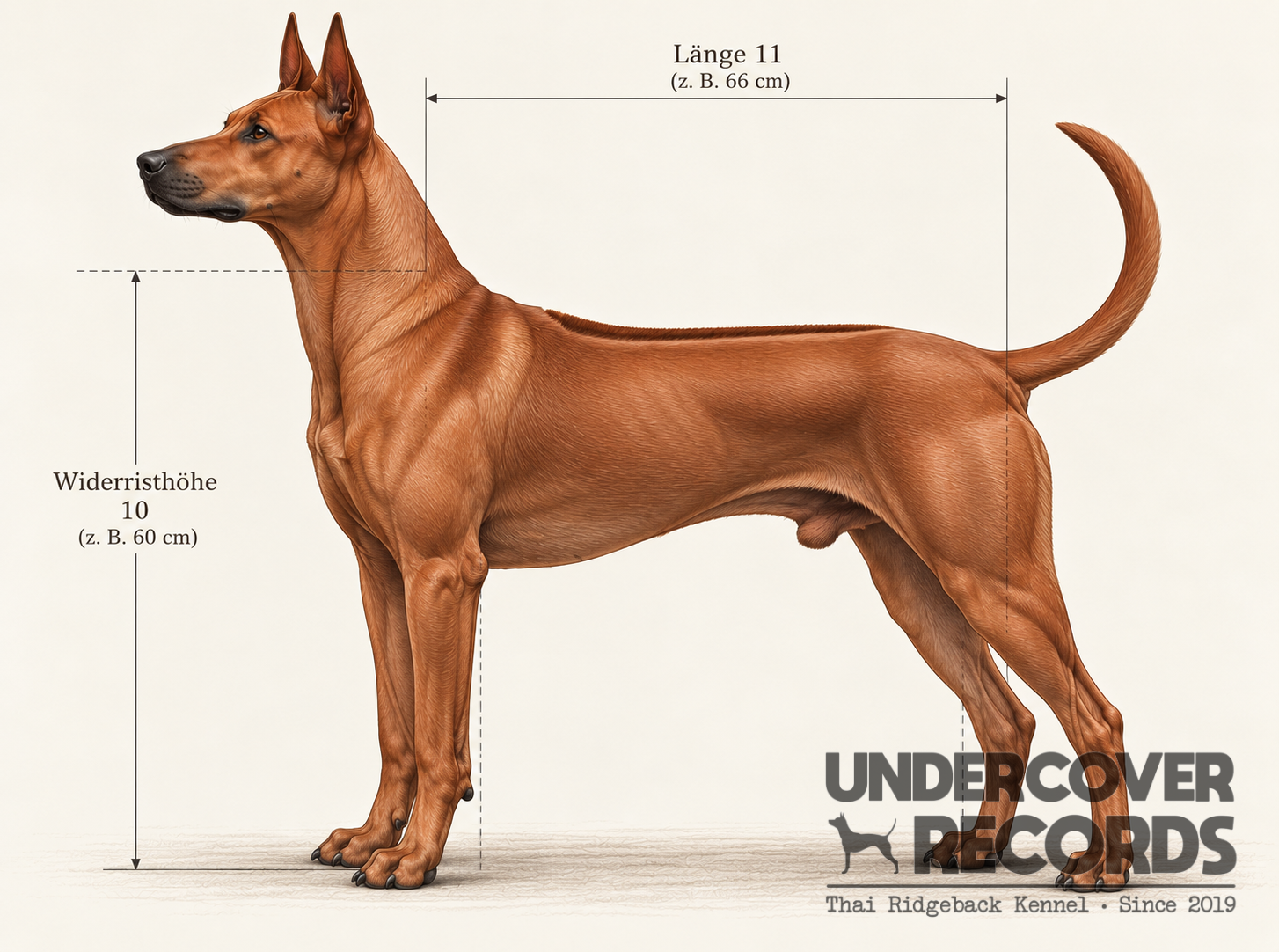
A medium-sized, athletic and well-muscled dog with harmonious construction. Body length to height at the withers is 11:10. Chest depth is approximately half the height at the withers.
Males: 56–61 cm, guideline weight 20–32 kg. Females: 51–56 cm, guideline weight 16–28 kg. Balance and condition are decisive. A wedge-shaped head, erect triangular ears, straight back, strong limbs and free, ground-covering movement define the overall picture.
Four colours. One breed type.
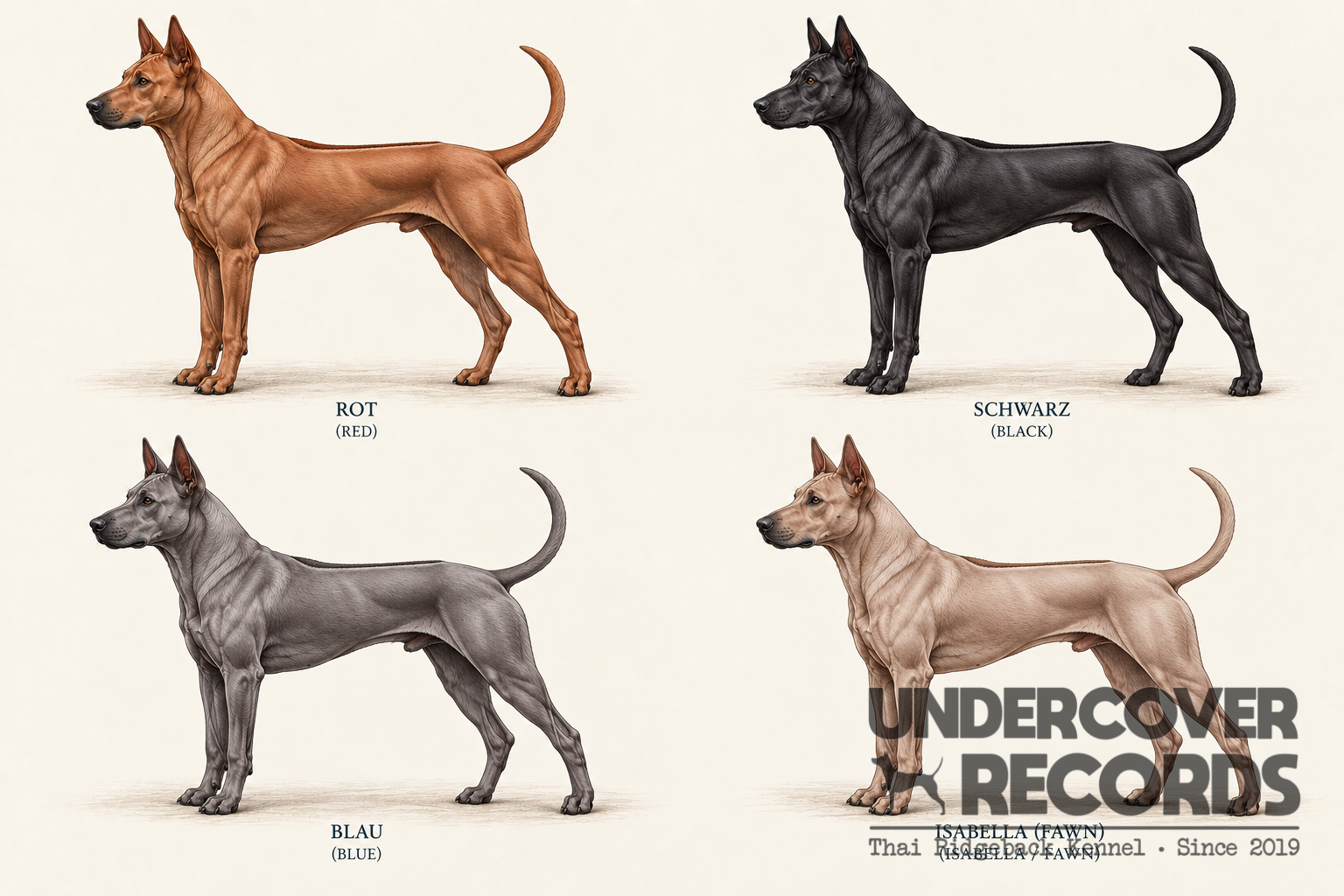
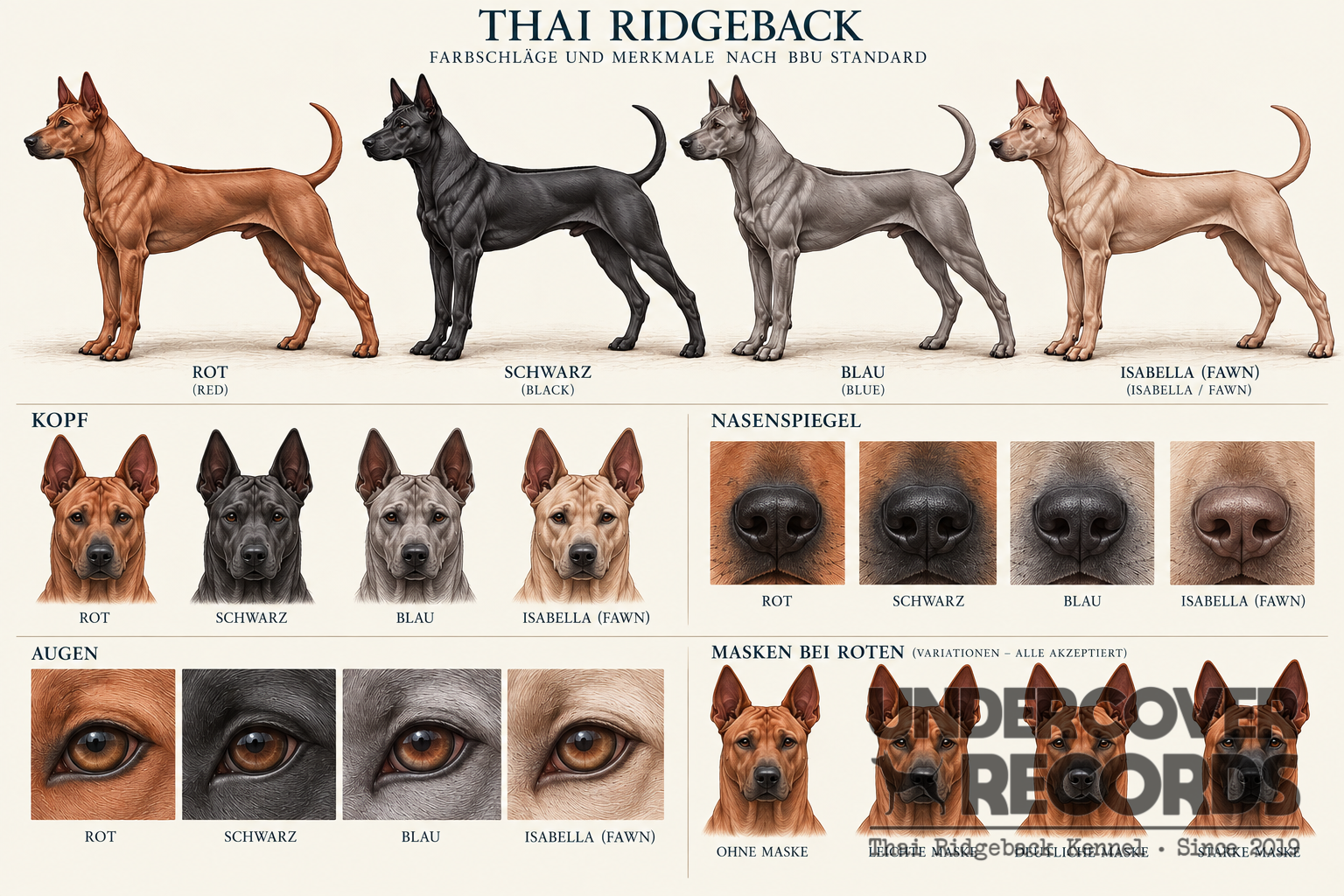
The short, smooth, close-lying coat has no undercoat. The BBU Standard recognises red, black, blue and Isabella (fawn).
Bei roten Dogsn sind unterschiedliche natürliche Maskenvarianten möglich. Der Nasenspiegel ist bei Rot, Schwarz und Blau schwarz; bei Isabella ist eine zur Farbe passende hellere Pigmentierung dargestellt.
The Ridge.
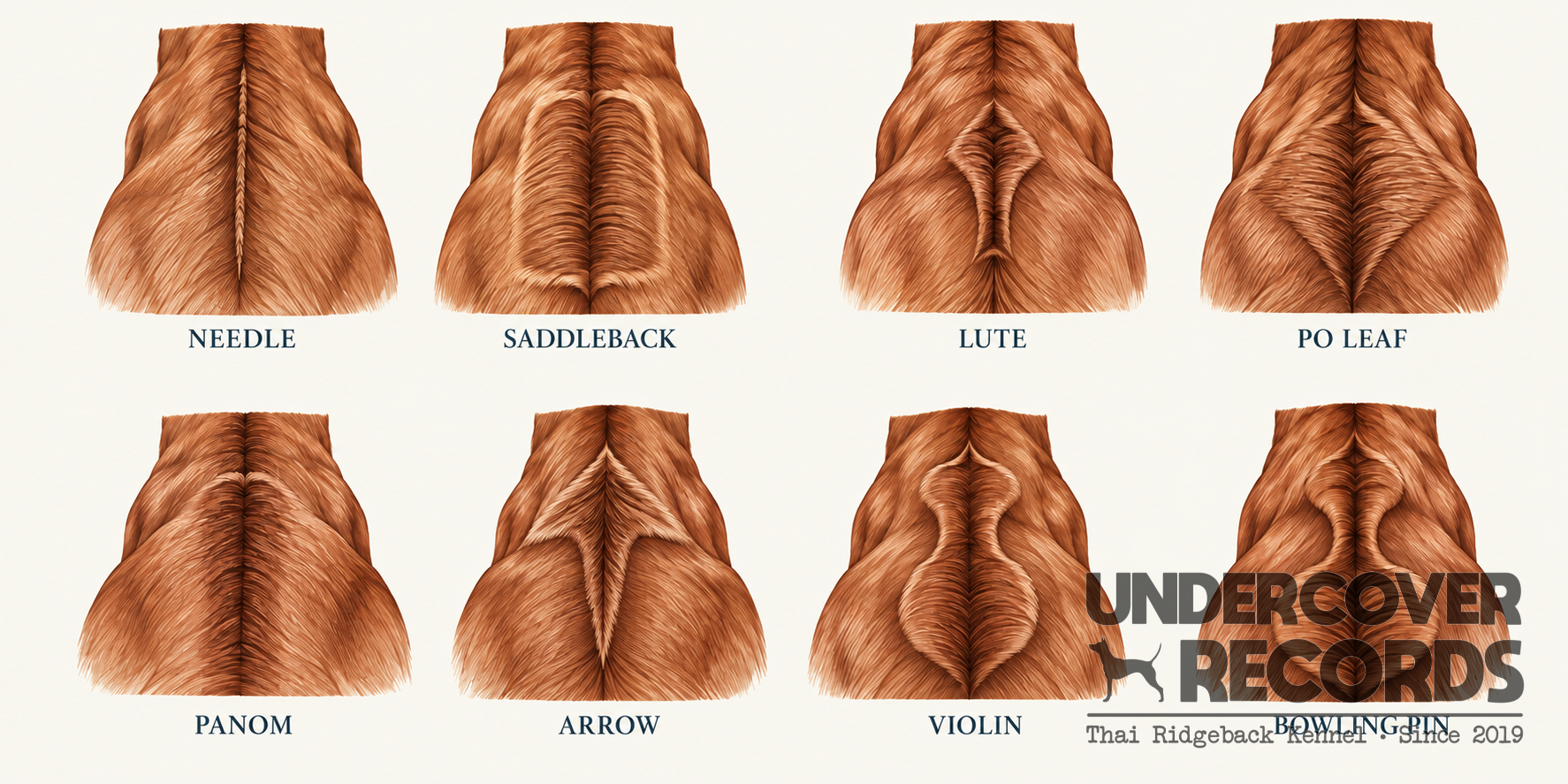
The ridge is formed by hair growing in the opposite direction to the rest of the coat along the back. It should be clearly visible, harmoniously arranged and characteristic of the breed.
The forms shown – Needle, Saddleback, Lute, Po Leaf, Panom, Arrow, Violin and Bowling Pin – are illustrative examples of natural variation, not a quality ranking.
More than outward form.
For us, the standard is a guide to preserving a healthy, functional Thai Ridgeback with sound temperament. A decorative ridge shape or individual visual preferences must never become more important than health, movement, character and genetic diversity.
Our breeding philosophy →BBU Breed Standard.
This page is an editorial presentation of the BBU Breed Standard. The authoritative wording is the original BBU Breed Standard. Our illustrations are intended to make its key points easier to understand; for the binding wording, please refer to the official original.
Alle Zeichnungen dienen der Veranschaulichung und ersetzen weder die Originalfassung noch die individuelle Beurteilung eines Dogss.